3 February 2026
Dashdot and PandaPanda merge into one AI-driven product studio
By Dashdot
Dashdot & PandaPanda joined forces 🤝🏻
Antwerp, February 3, 2026. Digital product studios Dashdot and PandaPanda announce their merger today. The combined team of 14 people will continue under the name Dashdot. Together, they aim to set the standard for AI-driven product development. Away from buzzword bingo and focused on where it delivers value for them: speed without compromising on quality.
Thanks to AI tools like Lovable, the barrier to software has virtually disappeared. Anyone can "prompt" an application together using ordinary language — a trend known as vibecoding. Founders are now building their own MVPs (Minimum Viable Products) in record time. Dashdot doesn't see this as a threat, but as a huge opportunity.
"The time when we had to debate for months about a first version is over," says Maarten Jansen, CEO of Dashdot. "Founders now come to us with a working prototype they built themselves using AI. That's a huge head start. The misconception is often that this code needs to be completely thrown out if you want to scale. We see it differently. We can almost always continue building on that foundation, by adding the necessary architecture, security, and stability to what's already there. It's a win-win: the founder saves time and budget, and we can focus on the complex puzzles that actually make a product grow."
Contrary to fears that AI will make developers obsolete, Dashdot sees demand for human expertise actually increasing. The team grows from 9 to 14 people through the merger.
"The prediction that AI will make developers obsolete isn't accurate. The role is changing though," says Arno Soontjens, the new CTO. "We're no longer pure code-writers, we've become architects who direct AI output. This actually makes custom software accessible to a much broader group of entrepreneurs. What used to take half a year, we now build in weeks, without the technical quality suffering."
With the arrival of PandaPanda, Dashdot brings in a distinct design vision. In a world where AI determines the average look-and-feel, character becomes a scarce commodity.
"Open Lovable and prompt a dashboard. You'll get something that works and looks exactly like every other AI-generated product," says Sebastiaan Schillebeeckx, Chief Product Officer. "That's fine for an experiment, but no foundation to build a brand on. We build products that people feel something for. In a world where everyone uses the same tools, taste becomes a real unfair advantage."

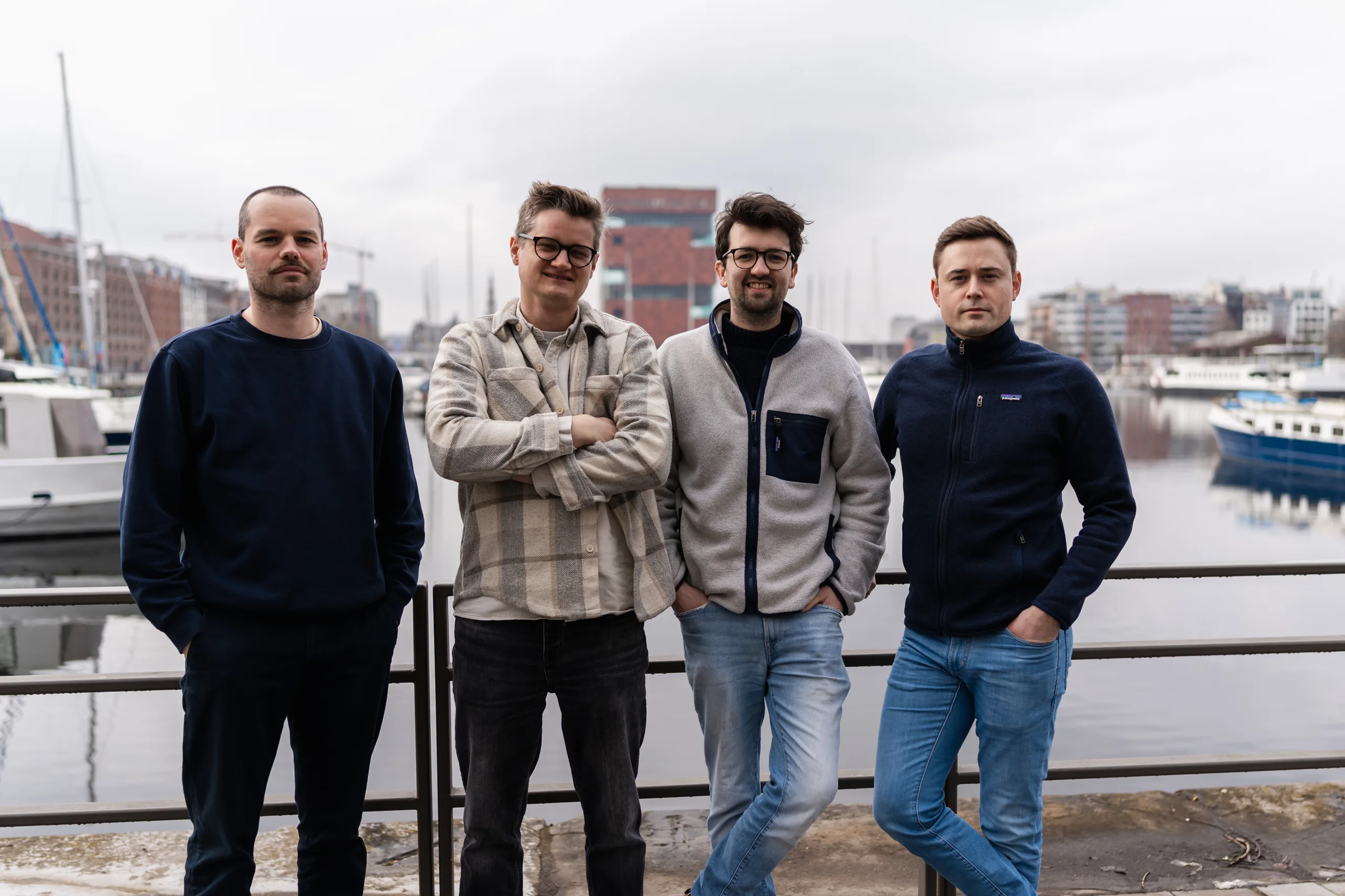
The merger brings the strengths of both studios together in a new board:
Maarten Jansen (Center-left, Dashdot) remains CEO
Arno Soontjens (Left, ,PandaPanda) becomes CTO
Sebastiaan Schillebeeckx (Right, PandaPanda) becomes CPO
Dries Vandermeulen (Center-right, Dashdot) will focus entirely on spin-off Webclew
That last shift is notable. Dries Vandermeulen is leaving the daily management to further develop Webclew, a spin-off that Dashdot set up together with ex-McKinsey consultant and privacy expert Thomas Ghys. Webclew helps companies gain insight into what's actually happening on their websites and apps in terms of tracking and privacy.
The merger also brings Fastlane along, a SaaS tool developed by PandaPanda that helps auditors with their follow-up. The full team will move into a new office on Antwerp's Eilandje in April.
"The name becomes Dashdot. The promise remains: a digital product studio for startups. Now with a bit more firepower: more people, and more AI," says Maarten Jansen.