
From paper to pixels: Making badminton digital
Challenge
Badman existed but nobody wanted to use it. The front end was clunky and hard to navigate. The technical implementation was buggy and unreliable. Adoption was at risk because players and clubs found it consistently frustrating. The back end worked fine - the front end needed a complete rebuild.
Solution
Dual-track approach: design sprints and user testing with actual players to restructure flows, plus a complete front-end rebuild in React (Next.js + TypeScript). Kept the reliable back end, modernized everything users actually touch. Design system for consistency, optimization for stability.
OUTCOME
- Players can actually navigate team formations and results without confusion
- Stable, robust front end that doesn't crash
- Higher adoption and engagement across clubs
- Digital workflow that cuts manual processing and provides instant results
When your sports app works great (in theory)
Badminton Vlaanderen is the official federation for badminton in Flanders, managing thousands of players, clubs, and competitions. They built Badman to digitalize what used to be done on paper: team formations, match scheduling, live result recording.
The app existed. The back end worked. But getting players to actually use it? That was the problem.
The challenge
Badman's UX was outdated and frustrating. Players couldn't navigate the interface without getting lost. The front end was technically unstable - bugs, crashes, reliability issues that made clubs hesitant to depend on it.
The federation had invested in building the back end properly. But if the front end makes users want to go back to paper forms, that investment doesn't matter.
Adoption was at risk. They needed a modernized version that kept the reliable back end but gave players a front end they'd actually want to use.
Our approach
We took a dual-track approach:
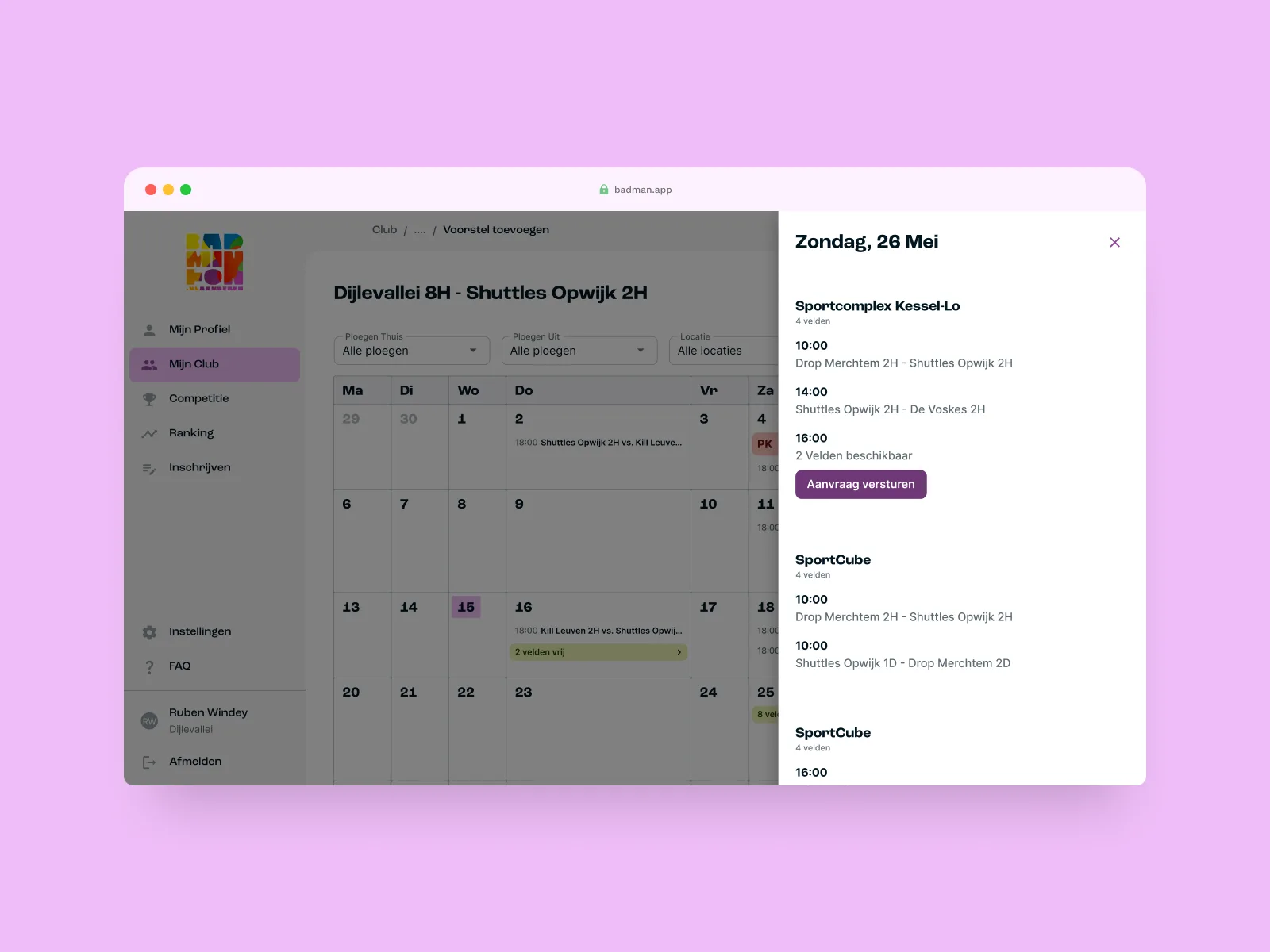
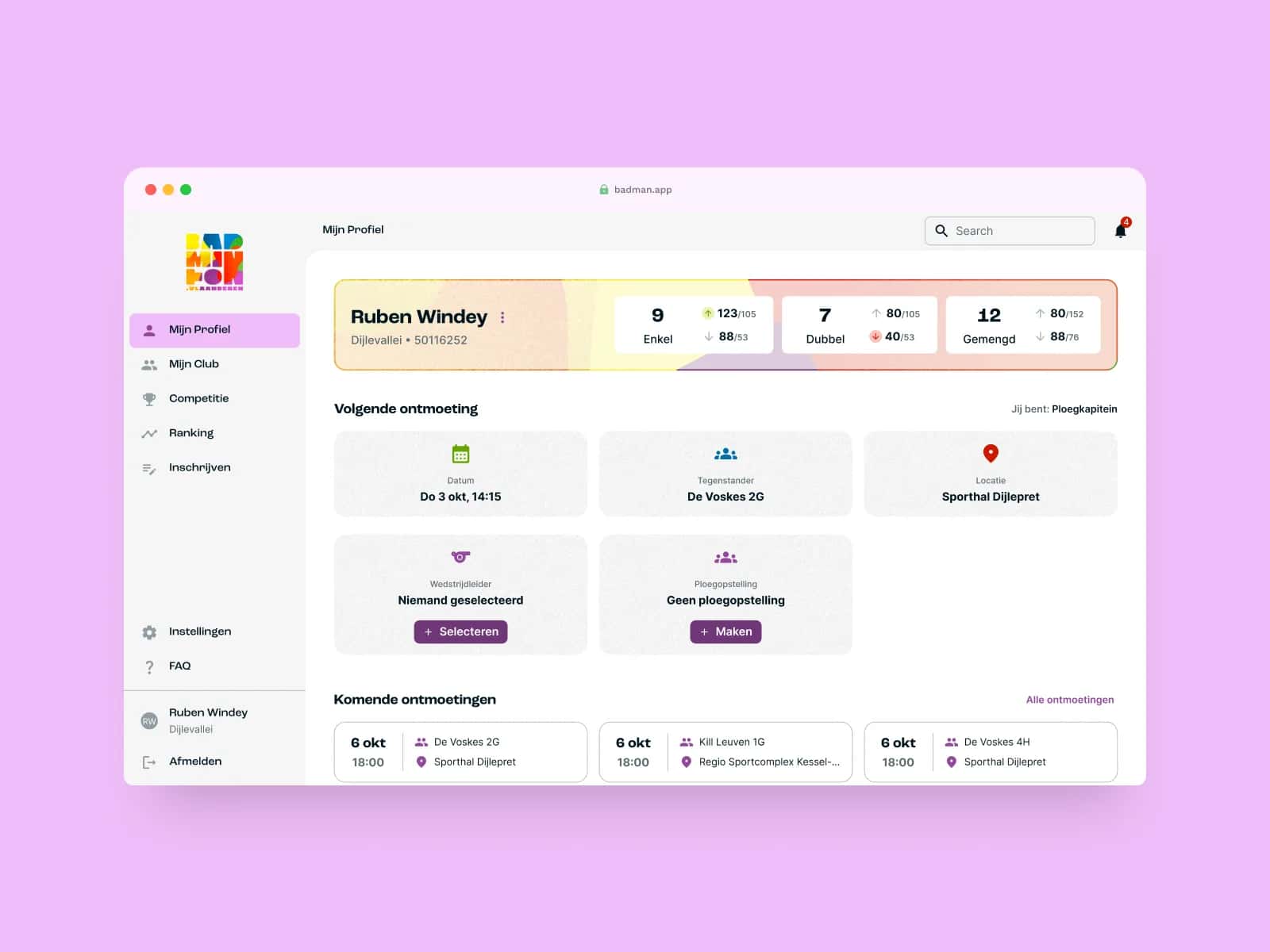
User-centered design: Multiple design sprints and testing sessions with actual players. We identified pain points and restructured flows to match how players actually prepare and play matches. Created a modern, accessible design system for consistency across the app.
Modern front-end development: Rebuilt the entire front end in React using Next.js and TypeScript. Focused on speed, scalability, and reliability - eliminating the bugs and crashes that plagued the old version. Kept the existing back end intact to minimize migration risks.
The outcome
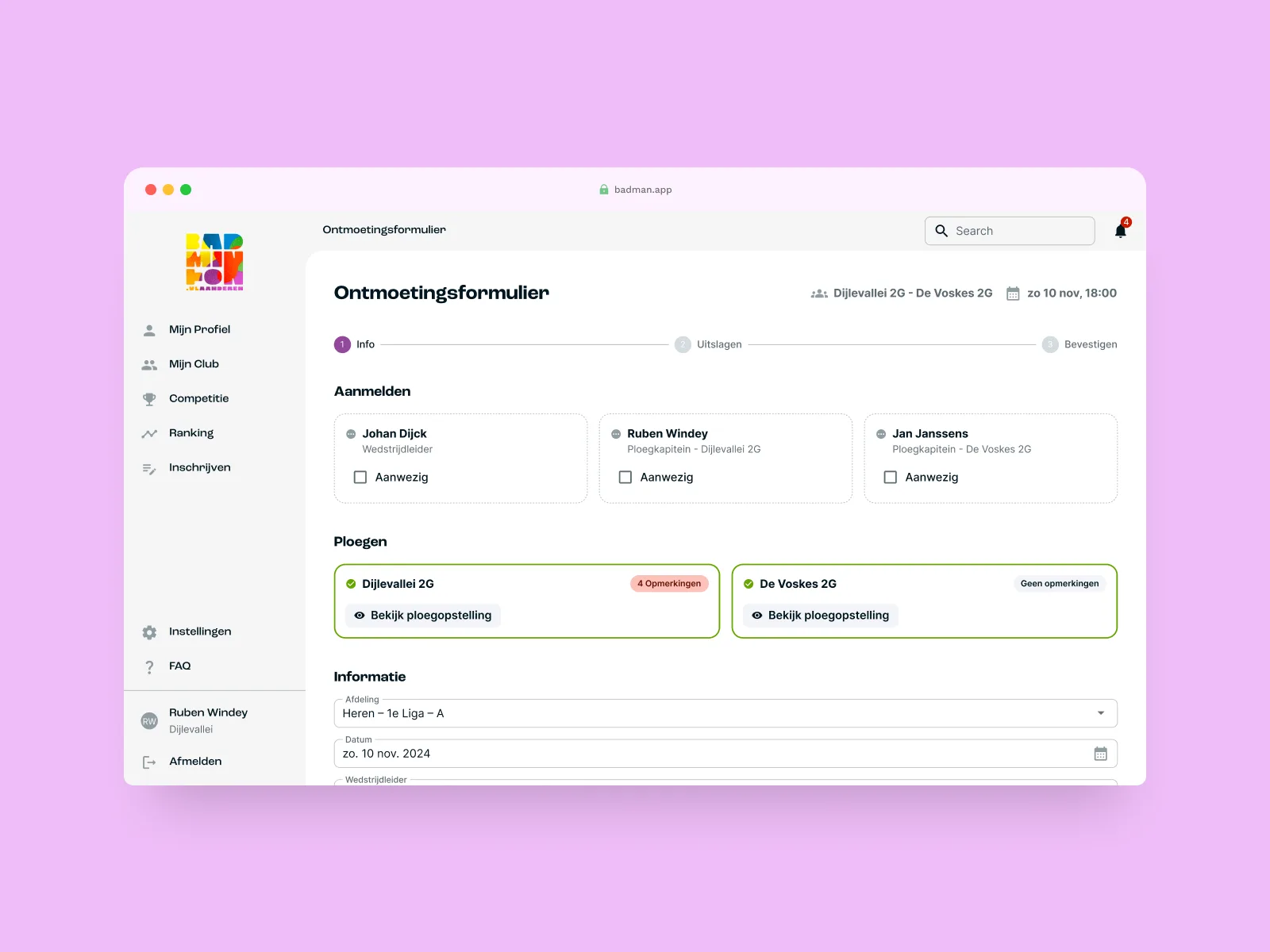
Players can now easily fill in team formations, update match dates, and record results without confusion. The new front end is significantly more robust - no more frustrating crashes or bugs.
Higher adoption and engagement across clubs because the interface was designed and tested with the people who actually use it. What used to be handled on paper with slow manual processing is now fully digital and automated.
"As a modern sports federation, we want to move with the times. We were looking for an app that provides exactly what our players and clubs need. A bullseye! PandaPanda* truly listens to our needs and delivers a strong digital solution." - Ruben Windey, Vice Chairman Badminton Vlaanderen
Badman has become an example of how sports federations can digitalize processes effectively. Sometimes the hardest part isn't building the technology - it's making sure people actually want to use it.
*Note from the author: PandaPanda and Dashdot became one in February 2026. This work dates from before the merger.